
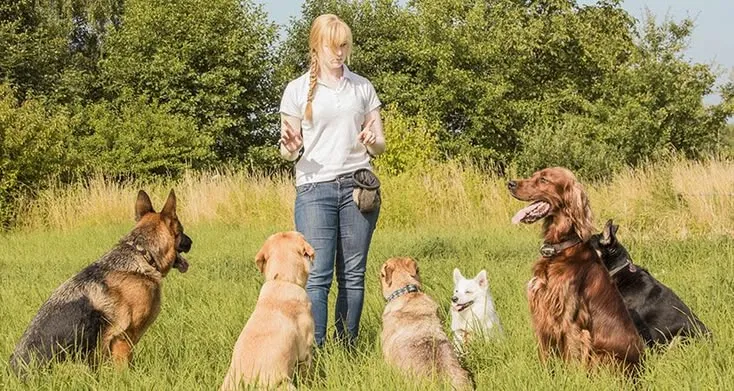
An expert dog trainer can be helpful if you desire more than just a list of instructions to practice. Good training takes into account the dog’s personality, its learning rate, its surroundings and its normal routine and will also inform the owner how to communicate effectively with the dog. With a thoughtful approach, one-off training objectives can become regular practices that are sustained outside of a training session.
Look Beyond Basic Commands
While basic commands are a good start, quality training will also take into account the response of the dog in actual situations. It might be easy to do in a quiet room, but it could take some extra practice to do in the presence of another dog, during a busy walk, or when visitors come to the house.
A good trainer is able to assist owners to progress from exercises to applications. This could be behavior around distracting stimuli, calm greetings, acceptable recall of information and waiting quietly, and correct walking.
Understand Individual Dogs
Dogs are not all alike in their learning style. The age, temperament, energy level, previous experiences, motivation and household routine may affect the way that an exercise is introduced.
An experienced trainer will be able to notice those differences and modify the training process. Short activities and frequent breaks can be useful for puppies, and movement and more challenging activities in between focused activities could be beneficial for an active adult.
Build Owner Confidence
Good dog training is about teaching the dog AND the owner. Owners must be aware of when to cue, how to reward correct responses and how to react to distractions to make an exercise more challenging.
A certified dog trainer can offer structured training and help the owner understand why certain exercises are used. It can make it easier to sustain training outside of sessions and have consistent expectations at home.
Practice Around Distractions
Distractions add difficulty to real-world training. A dog’s attention can be distracted by other dogs, traffic, bicycles, visitors, interesting smells or an unknown environment.
Distractions can be introduced gradually by a thoughtful program. Owners may start in a quiet place and practice in a less distracting place before they start in a more distracting place. This gives the dogs time to develop their skills in a gradual manner and not be expected to perform well in an environment that is too challenging.
Use Clear Communication
Dogs need clear, reliable cues, timing, body language and consequences to respond to owners’ requests. It can be less predictable to learn if family members are using different words or different reactions to the same behavior.
Training can be easier to understand if everyone employs a similar basic strategy. Owners can establish critical cues, expectations, rewards and household rules to give the dog the same information from others.
Adapt To Real Life
The most effective training should be relevant to the experiences owners have. It could be that a family requires more polite greetings at the front door, a more well-behaved family during mealtimes, more focused walking manners or more composed behavior when guests visit.
Owners will not only learn how to practice skills in a training environment, but also how to do so in their daily routines. This simplifies training and provides the exercises with an objective.
Evaluate Professional Fit
Know-how is more than just experience or qualifications. It’s also about communication, observation, adaption and practically talking about training concepts.
Check out how they approach training, their experience, training environment, how they communicate and whether they are able to train toward your objectives. The best fit should feel like it’s an appropriate size for the dog and the owner’s ability to maintain.
Conclusion
Owners are looking for a more structured approach to training, or personal guidance, when this is available in a professional setting. Training can be a continuous process, not just a single lesson, if people have realistic goals and stick to consistent repetition drills. If owners are thinking about having professional guidance, the website caninemoxy.com can be consulted to add to their knowledge of the support available for training. Hiring a seasoned professional with the know-how to teach a dog and a dog owner can be more focused, practical and more easily transferred into a dog’s day-to-day life.